
Mesa County Arrest Records and Charges
Mesa County arrest records begin on the law enforcement side. The Sheriff's Office CRIMEWATCH arrests page lists recent arrests with charge names, dates, and narrative details when the agency posts them. The jail locator and current population links can show custody information for people held in the county detention system. Those arrest and booking records help explain the first stage of a criminal matter, but they do not prove that the District Attorney filed every listed charge in court.
The court charge record begins when a prosecutor files formal allegations with the Clerk of Court. In Mesa County, criminal court records are Colorado Judicial Branch records at the Mesa County Justice Center, not county CORA records. The charge record may show a complaint, information, indictment, arrest warrant return, bond order, charge code, class or level, count number, filing date, and case status. The full case file and final outcome belong with Mesa County criminal court records, while the custody and booking side belongs with Mesa County inmate records.
The Mesa County Sheriff's Office CRIMEWATCH arrests page is the source for this arrest-record image.
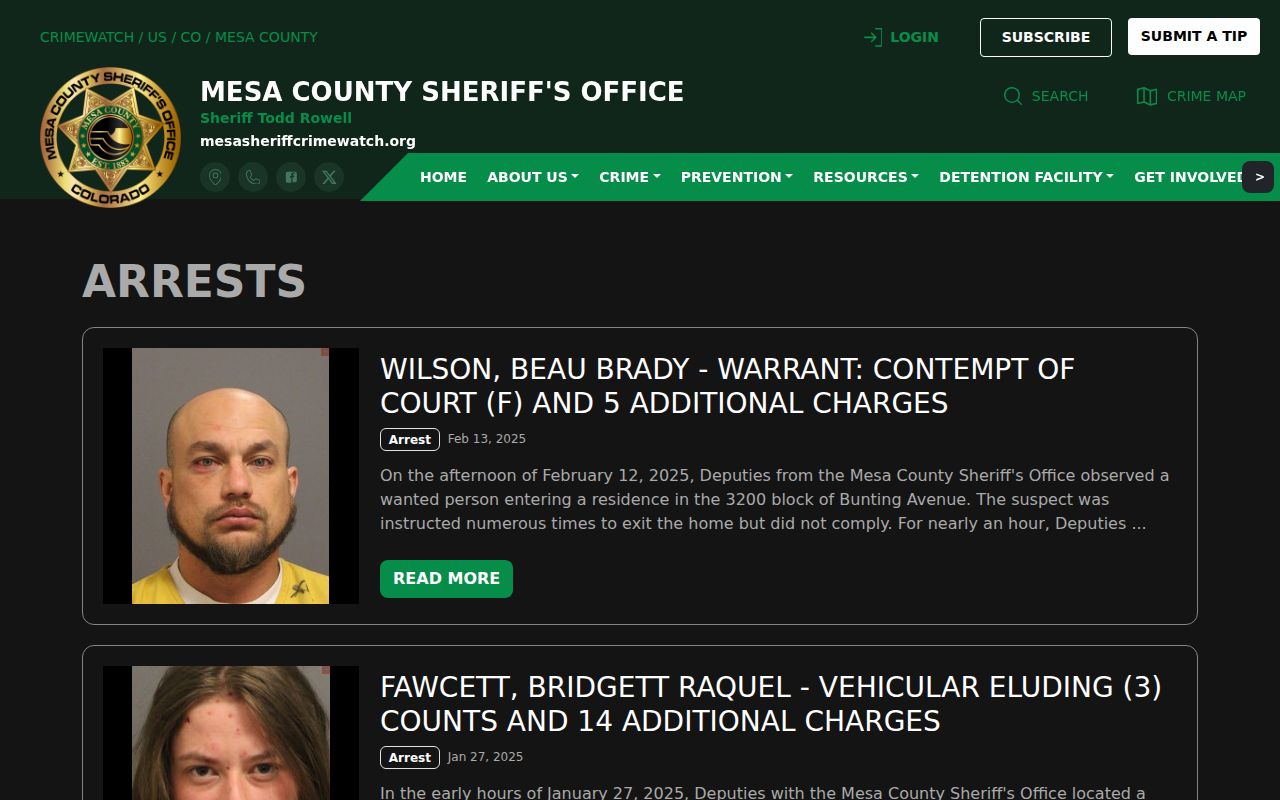
The arrests page is useful for law enforcement event information, but court charge status should still be checked through court records.
Search Mesa County Arrest Records
A practical Mesa County arrest records search uses more than one source. CRIMEWATCH can show sheriff-posted arrest notices. The inmate locator can show whether a person is in county custody. The Colorado Judicial Branch docket search can show whether filed charges, hearing dates, or case events have appeared in District Court or County Court. The 21st Judicial District Attorney decides what charges to file after reviewing law enforcement reports and evidence.
- Check the sheriff arrest page for recent public arrest posts and listed allegations.
- Use the inmate locator or current population link if the question is whether the person is in custody.
- Search the Colorado Judicial Branch docket by name, case number components, court type, and Mesa County.
- Read the charge list for each count, statute reference, class or level, bond entry, and current status.
- Use the Judicial Branch record/document request route for copies of pleadings, orders, or charging documents.
Law enforcement pages can post charges before the court file is complete. Court dockets can lag behind an arrest if the filing decision has not been made or the clerk has not processed the filing. If an arrest notice mentions a warrant, bond, or court date, check the warrant page, the docket, and the court clerk rather than treating a single post as the whole record.
Mesa County Charges After Arrest
The 21st Judicial District Attorney's Office serves Mesa County. The DA is Daniel P. Rubinstein, and the office is at the Justice Center in Grand Junction. After an arrest, prosecutors decide whether to file charges, amend the allegations, decline charges, divert a matter, or proceed on fewer or different counts than the arrest record first showed. That is why a charge after arrest should be read as a filed allegation, not as a conviction.
The DA page also identifies Juvenile Diversion and Lighthouse Programs at the CMU Wellness Center North Entrance. Diversion can matter because a case or referred matter may move away from ordinary conviction and sentencing tracks. The official 21st Judicial District Attorney data dashboard can provide broader prosecution context, but individual charge status still comes from court filings and case records.
21st Judicial District Attorney
125 N Spruce St.
Grand Junction, CO 81501
970-244-1730
Monday-Friday 8:00 a.m.-4:30 p.m.
Mesa County Charging Documents
Formal court charges are usually tied to a charging document. The research identifies criminal files that may include complaints, informations, indictments, advisements, arrest warrant returns, bond orders, plea paperwork, motions, disposition sheets, sentencing orders, probation terms, and mittimus documents. For a charge-focused search, the charging document and later amendments are the first records to read.
| Document | Who Uses It | What It Does | Mesa County Search Use |
|---|---|---|---|
| Complaint | Law enforcement or prosecutor filing path | Starts or supports charges in many criminal matters. | Check for charge name, count, statute, and filing date. |
| Information | Prosecutor | States formal charges filed by the District Attorney. | Compare it to the arrest allegations to see what changed. |
| Indictment | Grand jury process | Charges a case through grand jury action. | Less common, but read it as the formal charge source when present. |
The charge document can differ from a sheriff post. One arrest can produce several counts. Some counts can be added, reduced, dismissed, or amended as the case moves. A court docket gives the event trail, but document copies may require the Judicial Branch record/document request form or clerk contact.
Mesa County Charge Status
Charge status describes where an allegation stands in the court case. It can be pending before plea or trial, amended after review, reduced during negotiation, dismissed by court order or prosecution decision, or resolved by plea, verdict, deferred outcome, or sentence. A docket entry may be brief, so the actual order or minute entry can matter.
| Status | What It Means | What to Check |
|---|---|---|
| Pending | The charge is still active and has not reached final disposition. | Next hearing, bond terms, and attorney entries. |
| Amended | The charge text, count, class, or statute has changed after filing. | Original filing, amended filing, and docket date. |
| Reduced | The filed charge was lowered to a less serious count or level. | Plea paperwork and disposition entry. |
| Dismissed | The court or prosecutor ended the charge without conviction on that count. | Whether dismissal was with or without prejudice. |
| Deferred | Final judgment may depend on completing court-ordered terms. | Deferred agreement, review date, and later disposition. |
| Convicted | A guilty plea, verdict, or other qualifying outcome established guilt. | Sentence, probation, fines, or mittimus documents. |
Colorado court dockets use case class and number fields such as year, class, and sequence. Criminal cases may use CR or other criminal-related classes. A person reading Mesa County court charges should use the case number, court type, party name, and filing date to avoid mixing similar names or separate cases.
Mesa County Charge vs Conviction
An arrest or filed charge is an accusation. A conviction is a later court result. That distinction matters for employment, housing, licensing, personal research, and court follow-up. A sheriff arrest notice can show what a person was arrested for. A court charge record can show what prosecutors filed. Only the court disposition shows whether that charge ended in conviction, acquittal, dismissal, deferred outcome, or another result.
| Point of Comparison | Charge | Conviction |
|---|---|---|
| Meaning | An allegation filed after arrest or summons. | A finding or plea establishing guilt. |
| Record source | Charging document, docket, arrest warrant return, or sheriff record. | Disposition, judgment, sentence, or plea record. |
| Proof level | Based on probable cause and filing standards. | Based on plea or proof beyond a reasonable doubt. |
| Can change | Yes, charges may be amended, dropped, or reduced. | Yes, but changes usually require court action or appeal. |
| Search caution | Do not treat it as guilt. | Check sentence and later sealing or appeal activity. |
Mesa County Bond and Warrants
Bond and warrant entries often connect arrest records to court charge records. A criminal file may include arrest warrant returns and bond orders. A jail or sheriff source may show custody or arrest context. The court docket may show advisement, first appearance, bond review, failure to appear, or later warrant activity. When a charge search shows a warrant or missed hearing, the next source is often the Mesa County warrant records path.
The Sheriff contact page is the source for this Mesa County arrest-record image.
The contact page helps because non-emergency dispatch is the official verification route for law enforcement questions that are not emergencies.
If the question is a court hearing, call the Mesa County Justice Center clerk at 970-257-3640 or use the Judicial Branch docket. If the question is whether the Sheriff's Office is trying to contact someone about a warrant, non-emergency dispatch at 970-242-6707 is the verification point identified in the warrant research. Emergency situations still go to 911.
Mesa County Sheriff Charge Context
The Sheriff's Office CRIMEWATCH system gives local context that court records do not always show. It can publish arrests, warrants, cases, tips, crime map links, agency news, prevention resources, and detention links. The Inside Your Sheriff's Office page describes technology, partnerships, mental health response, alternatives to incarceration, and recidivism reduction. It also describes a Major Offenders Task Force that works with local, state, and federal agencies to find wanted criminals.
The Sheriff's initiatives page is the source for this arrest-and-charge image.
Those initiatives help explain why some arrest records connect to mental health response, alternatives to incarceration, warrants, or task force activity.
Readers should still keep the source boundary clear. Sheriff records describe law enforcement events and custody status. The DA filing decision controls formal court charges. The court record controls hearings, pleas, disposition, sentence, and sealing orders.
Mesa County Arrest Alerts
The Sheriff's Office also supports a non-emergency tip form and CRIMEWATCH Mobile app channels. The Mesa County Sheriff's Office submit-tip page is for non-emergency information. It is not a court record request, not a way to clear a charge, and not a substitute for 911 in an emergency.
The tip form is the source for this Mesa County arrest-record image.
Tip channels can support law enforcement follow-up, but court charge records must be verified through court and prosecution channels.
The Sheriff's pages link to CRIMEWATCH Mobile through both app stores. The Apple App Store CRIMEWATCH Mobile page and the Google Play CRIMEWATCH Mobile page support following the Mesa County Sheriff's Office for updates. The app was verified as an alert and follow channel for CRIMEWATCH content, not as an app-only court charge database.
The Apple App Store listing is the source for this arrest-record image.
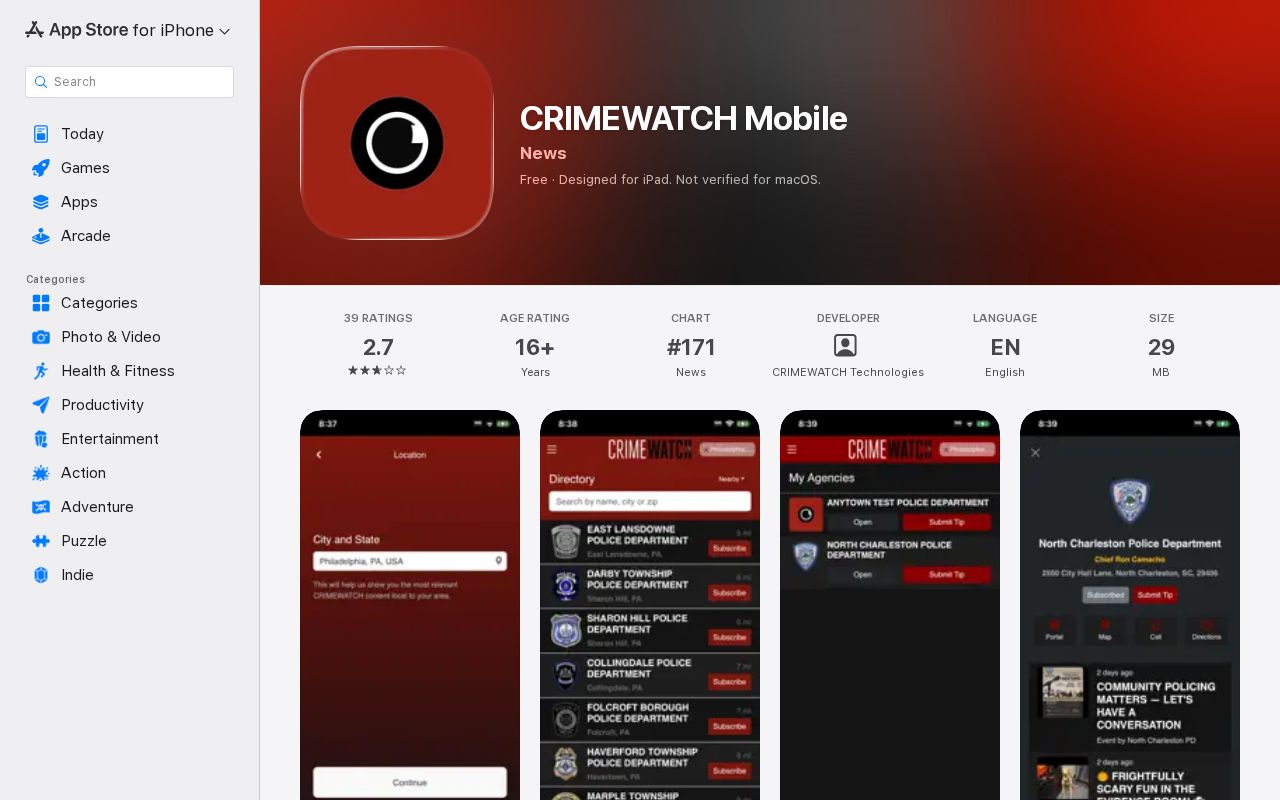
App alerts can help track sheriff-posted arrests and warrants, but they do not replace the court docket or record request process.
The Google Play listing is the source for this Mesa County arrest-record image.
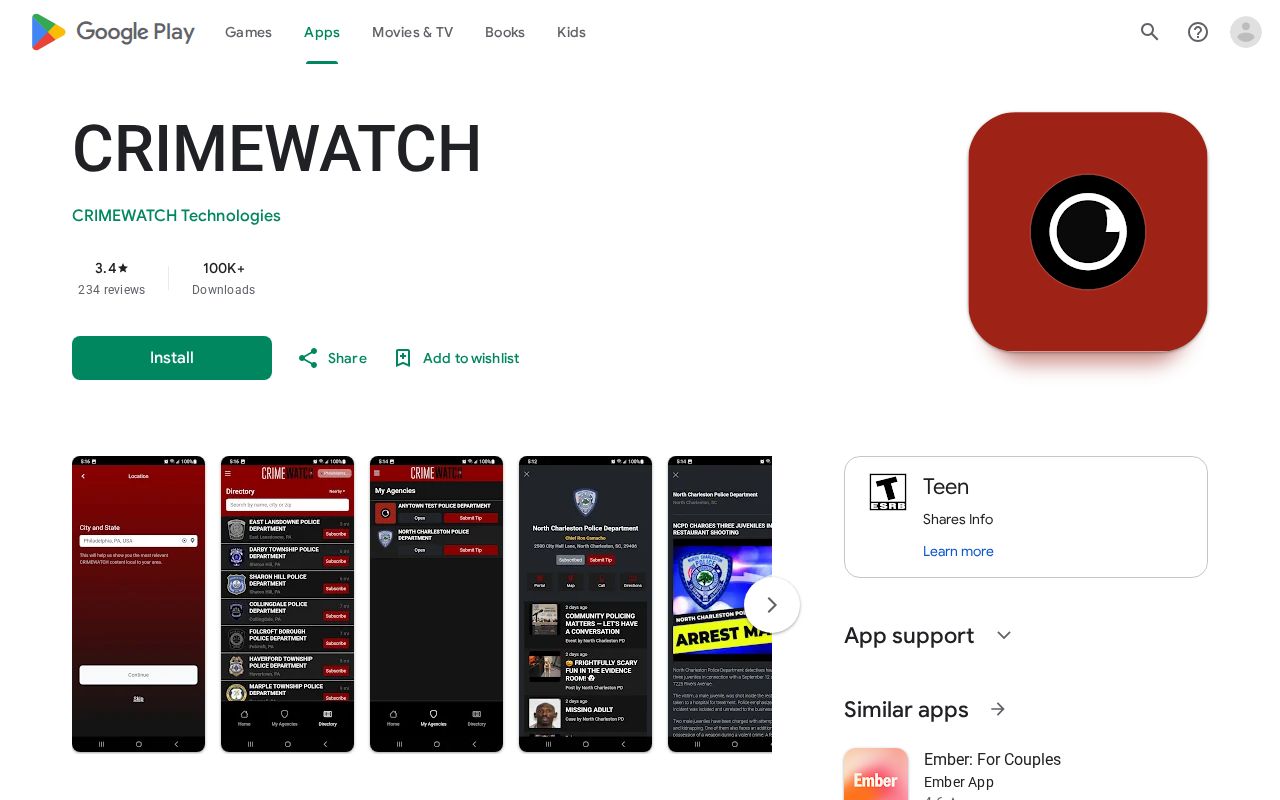
Both app-store sources point back to the same CRIMEWATCH ecosystem that Mesa County Sheriff's Office uses for public safety updates.
Restricted Mesa County Arrest Records
Public access to arrest records and court charge records has limits. Juvenile case records are restricted, and juvenile delinquency records may be expunged in qualifying cases under Colorado law. Sealed criminal justice records and sealed court files are not ordinary public records. Personal identifiers, minors' names, victim-sensitive information, medical details, and active investigation material may be redacted or withheld.
Colorado access rules include CORA for many government records, Chief Justice Directive 05-01 for court-record access, and sealing statutes identified by the Colorado Bureau of Investigation, including C.R.S. 24-72-705 and 24-72-706 for certain criminal justice and conviction records. Mesa County's CORA form expressly says court cases, including divorce and criminal cases, are not kept by Mesa County and must be requested from the Court.
Important: Arrest records and filed charges are not proof of guilt; always verify status with the court or originating agency.